Boxette Shop
connecting Shopify to Poizon
I find the hard part in the product-data chain: Poizon identifiers, stock, translation, currency and local payment must stay traceable.
- Field
- Cross-border commerce / Uzbekistan
- Built with
- Shopify / Poizon API / Click Pay
- Project year
- 2025
The challenge
Boxette Shop served customers in Uzbekistan with original products sourced abroad. The challenge was to turn a Chinese source catalogue into products people could browse, understand, price in local currency and purchase with local payment methods.
The approach
I adapted the Shopify theme and built the Poizon integration. Product import, daily stock updates, translations and configurable pricing fed the local catalogue. I connected Click Pay and Payme to checkout and set up product variants, regional details and baseline on-page SEO.
From a source catalogue to a local order.
The storefront was the visible part. I also worked on the data path behind it, from Poizon identifiers and stock to prices, languages and payments in Uzbekistan.
PaymeUzbekistan
Editorial model of the documented integration, not a recovered interface
Keep the source traceable
The import used JSON product data, SPUID identifiers and original product links. A custom prefix helped preserve the connection between each Shopify item and its source.
Refresh what can change
The module updated products daily and retrieved stock information. Sets and variants were configured in the Shopify catalogue for the regional storefront.
Prepare the catalogue for Uzbekistan
Chinese product content was prepared for Russian and Uzbek, with an English intermediate version in the documented workflow. Yuan-to-sum conversion and margins were configurable rather than hard-coded.
Finish with local payment
Click Pay and Payme were connected to the checkout interface. Regional purchase details and baseline on-page SEO were part of the store setup.
The project, in detail
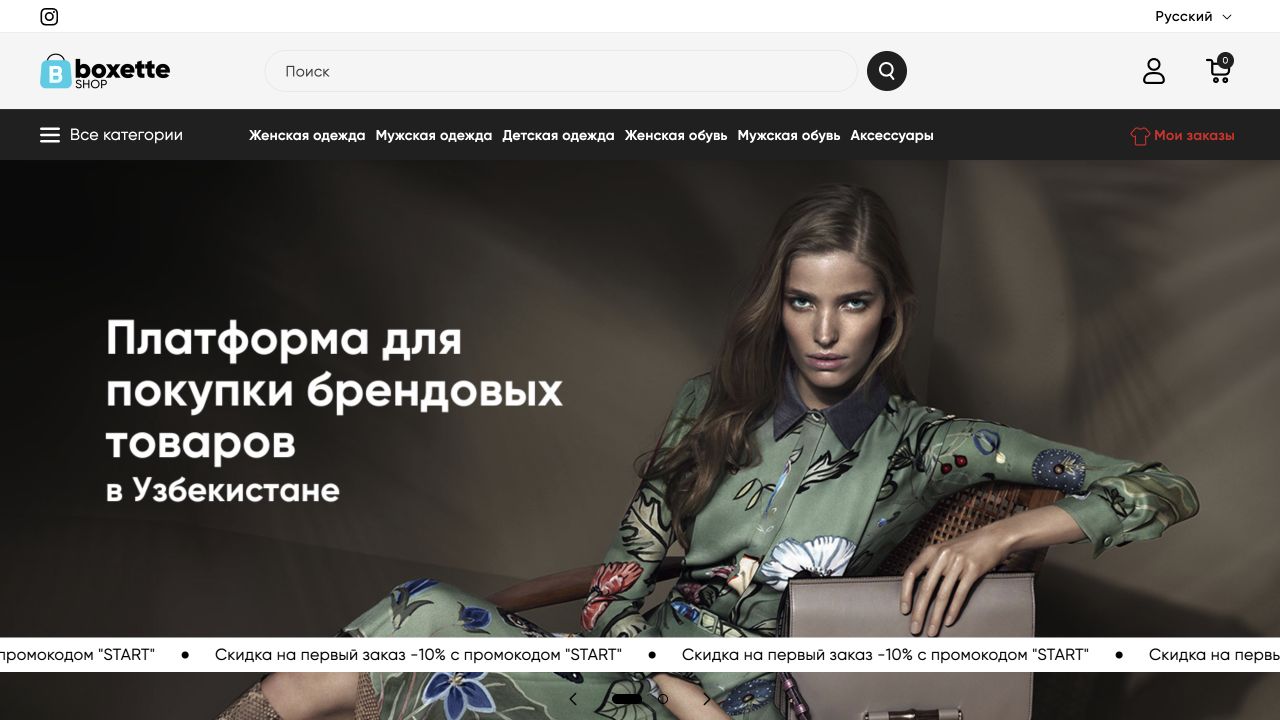
These are genuine 2025 browser captures from the Internet Archive, followed by editorial diagrams of the documented integration. The Russian storefront text remains unaltered.
What the archive shows
The public archive preserves the storefront's campaign, collections, product prices and mobile layout in 2025. It does not establish who created each visual element. My documented scope was the Shopify adaptation and the product-data, localization and payment integrations. The original store is no longer available.
The original store, on record
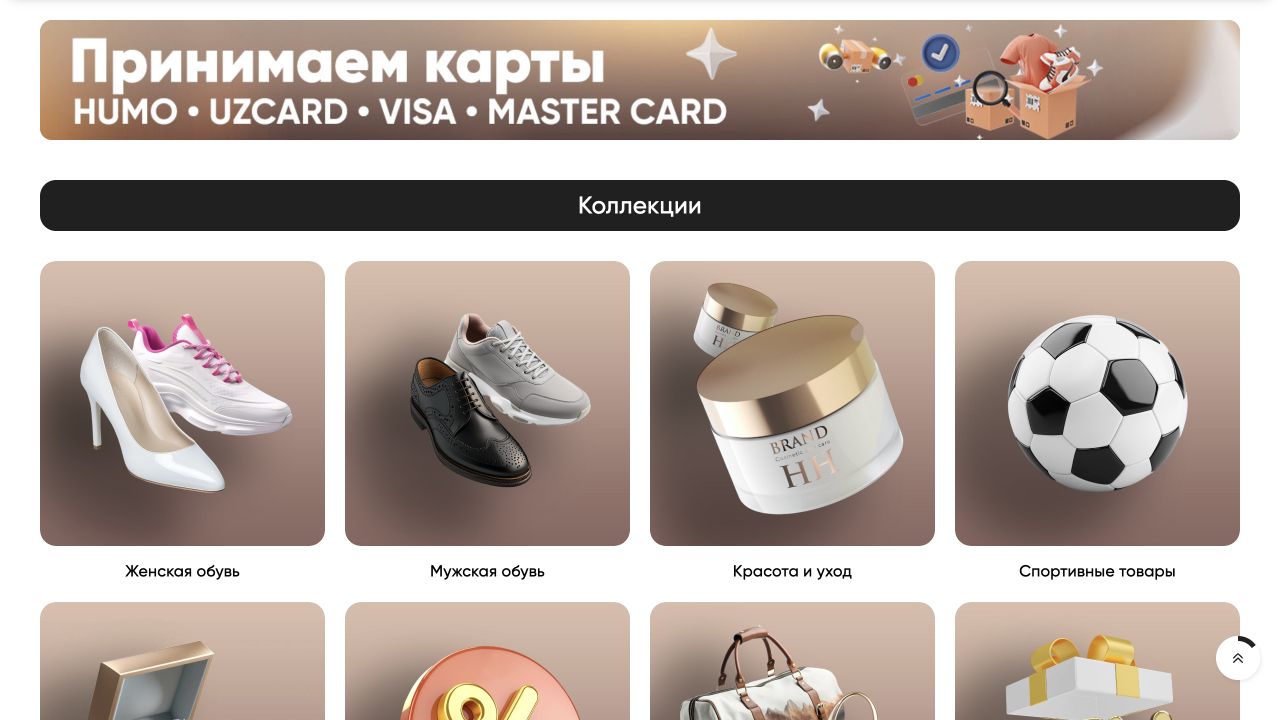
Collection navigation in the April 2025 public archive. The Russian copy remains as it appeared in the store.
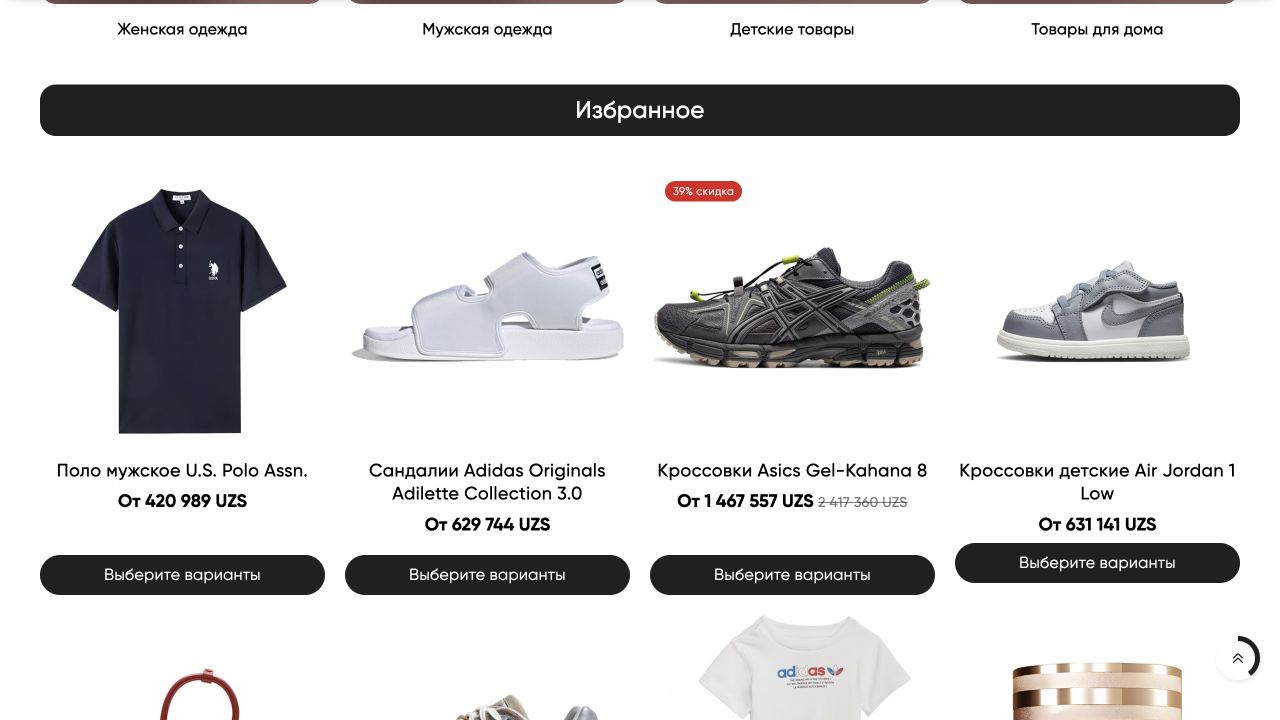
A product listing from the April 2025 public archive, showing the regional currency and variant controls.
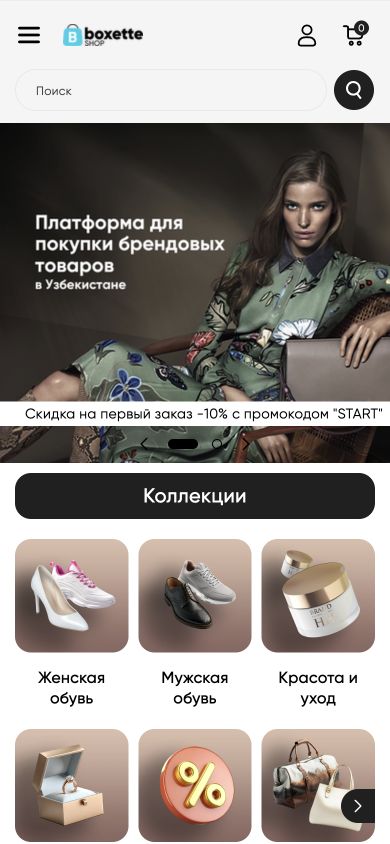
The April 2025 public storefront at a mobile width. It is a historical browser capture, not a reconstruction.
A source catalog made local
The Poizon feed supplied the source products; the Shopify store needed its own regional product records. Import, stock refresh, translation and configurable prices formed one catalogue workflow. Product variants and local payment options then carried those records into a checkout for customers in Uzbekistan.
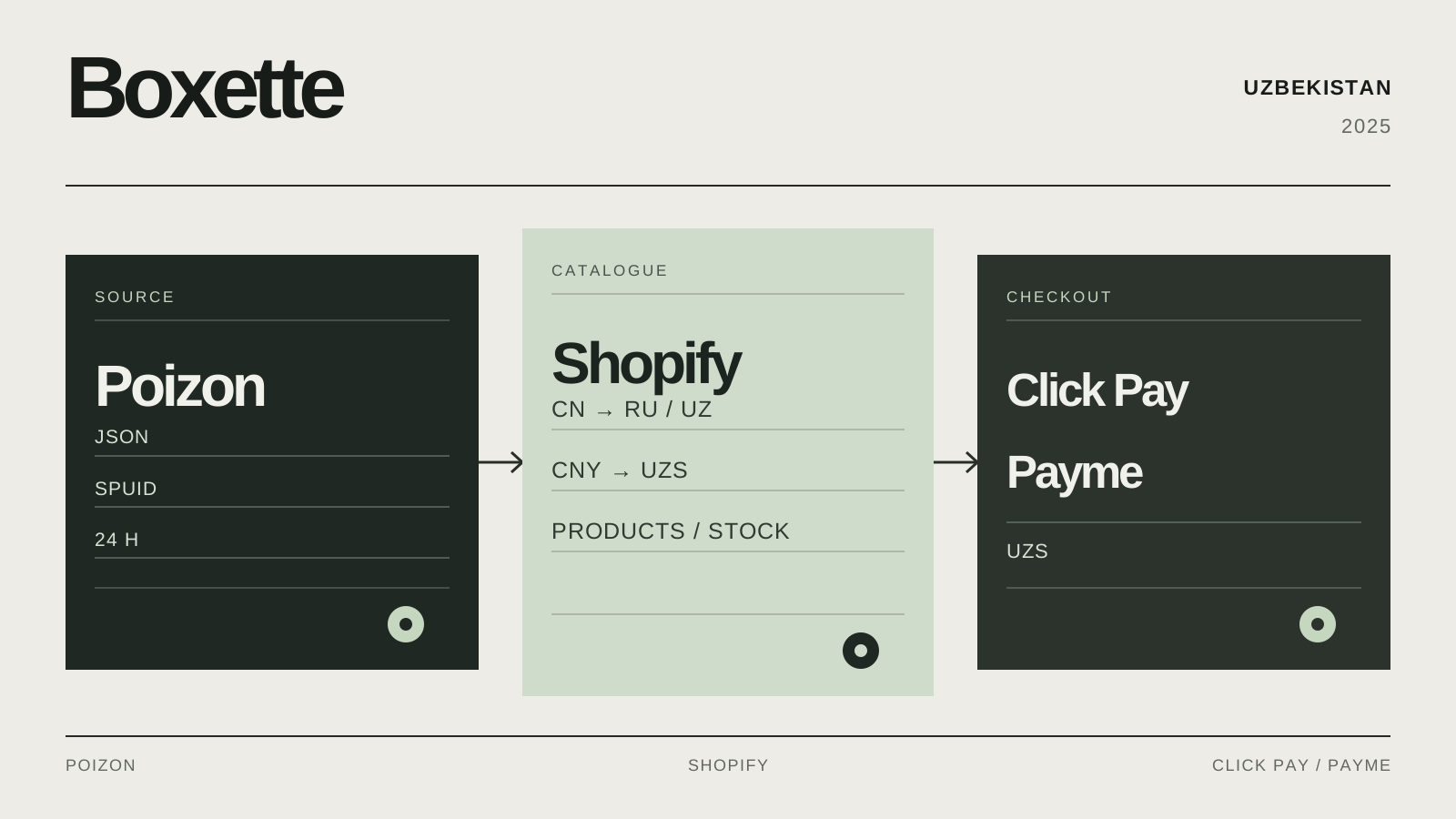
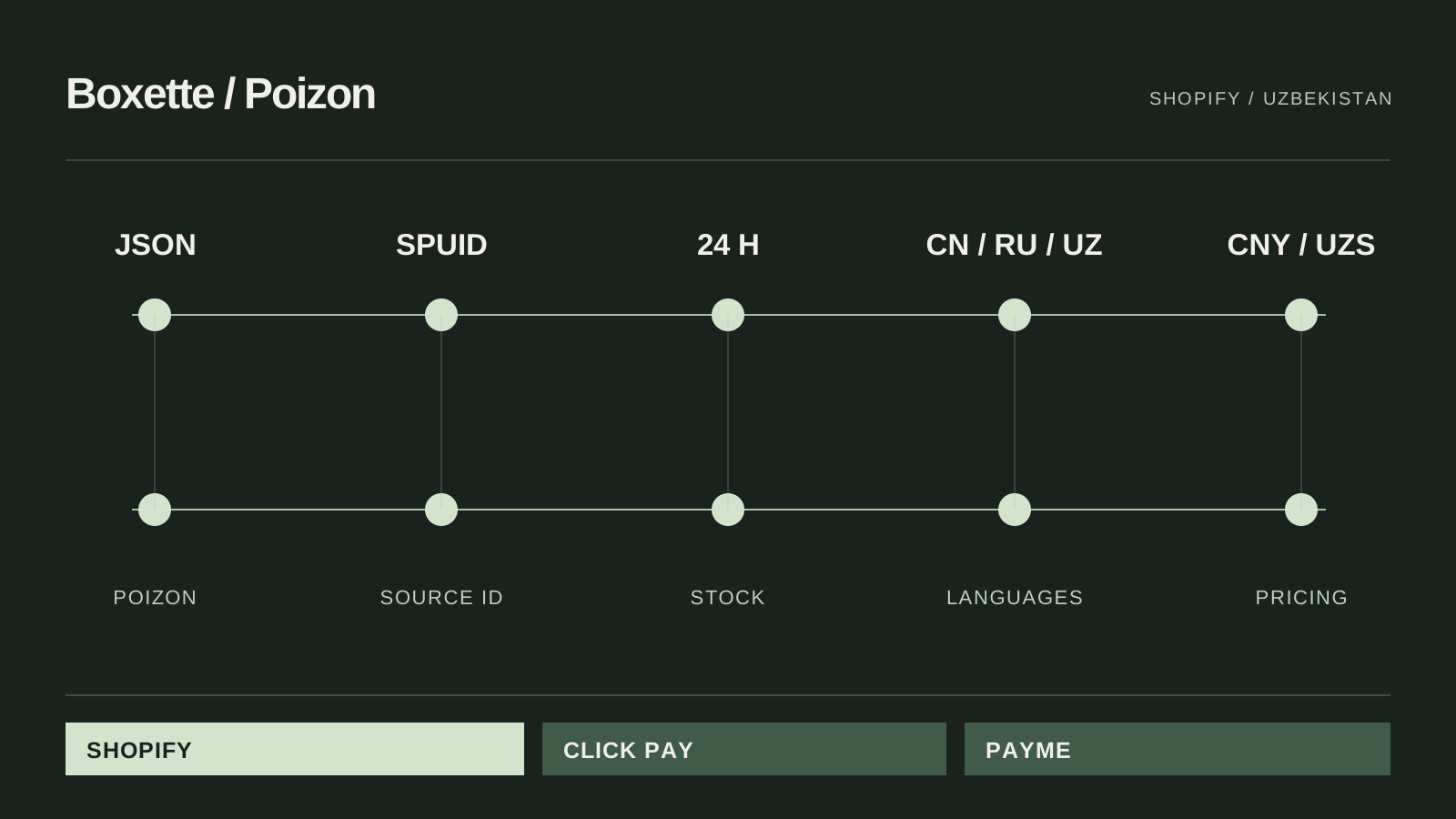
What I built
Bulk import and daily product updates
Chinese catalog content prepared for Russian and Uzbek
Click Pay and Payme integrations
Details of Boxette Shop
What connected Poizon to the Shopify store?
A custom module imported JSON products with SPUID identifiers, refreshed product and stock data daily, and prepared translations, prices and currency conversion for the Uzbekistan catalog.
Are these actual Boxette Shop screenshots?
The storefront images are genuine browser captures of the public site preserved by the Internet Archive in April 2025. The two system diagrams are editorial reconstructions based on the documented project scope. The original store is no longer available.